Search site
Contact
E-mail: mda07lch@shef.ac.uk
References
Corsten MF, Shah K (2008) Therapeutic stem-cells for cancer treatment: hopes and hurdles in tactical warfare Lancet Oncol. 2008 Apr;9(4):376-84.
Cunliffe, VT (2004) Histone deacetylase 1 is required to repress Notch target gene expression during zebrafish neurogenesis and to maintain the production of motoneurones in response to hedgehog signalling. Development, 2004 Jun;131(12):2983-95.
Grossbach, U (2009) Seventy-Five Years of Developmental Genetics: Ernst Caspari's Early Experiments on Insect Eye Pigmentation, Performed in an Academic Environment of Political Suppression. Genetics. 2009 Apr;181(4):1175-82.
Introduction
Developmental genetics is a branch of genetics dedicated to understanding how genes influence the deveopment of a complex multicellular organism from a single cell. Mutations in genes leading to the disruption of development can lead to severe defects in the function of a vital system in an organism (e.g. nervous system) resulting in a disease state which cannot be fully treated until the underlying cause is completely understood.
Regenerative medicine using stem cells is also dependent on understanding the gene expression patterns occuring during the specification and differentiation of cells in different tissues.
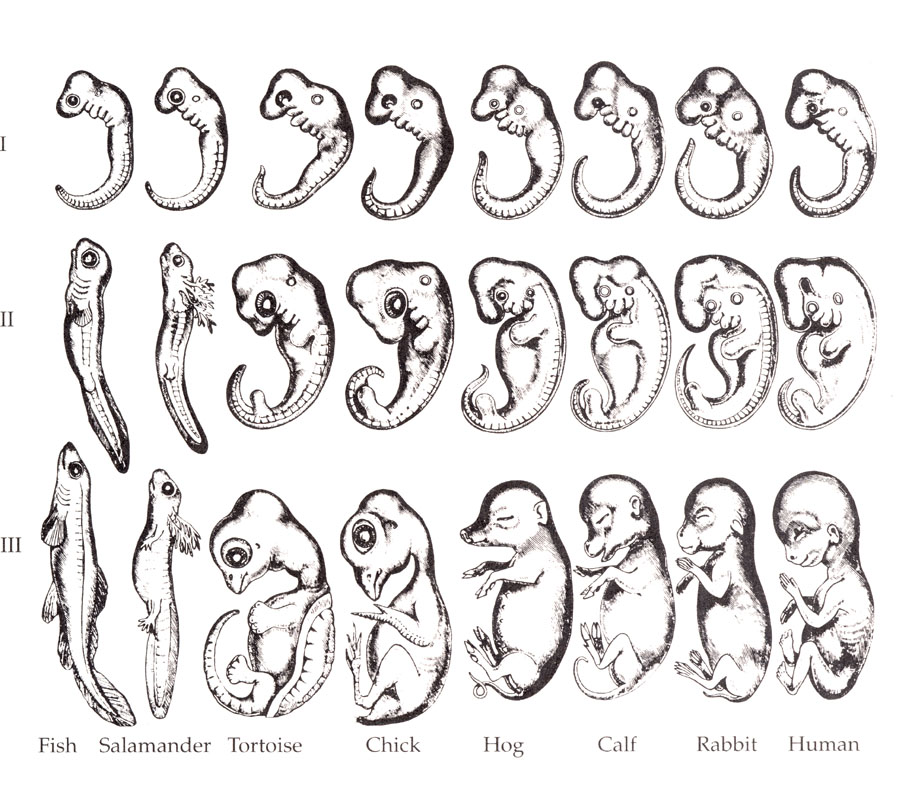
Various animal models have been used to define genetic abnormalities during development, many of which reveal the function of genes in cell fate or produce recognisable disease states. Identifying these mutations is vital in order for effective treatments to be developed.
On this website you will find an outline of the approaches used to study animal models and some examples of where these studies have proved successful in furthering the knowledge of medical conditions and developing novel treatments.
Banner image courtosy of wikimedia commons under creative commons attribution 2.5 license